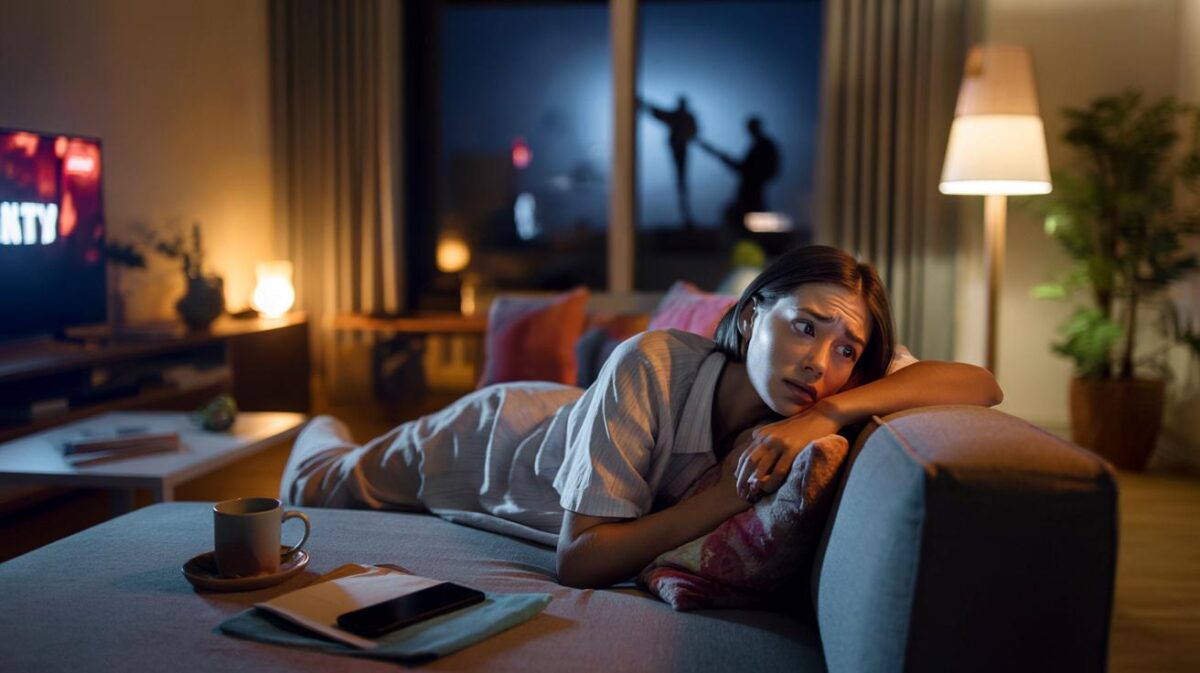
The room was loud enough to buzz, but her brain felt louder. Birthday dinner, long table, overlapping conversations, phones lighting up with photos of the dessert. Laura smiled at the right moments, laughed when the others did, threw in a joke here and there. From the outside, she looked like someone having a perfectly normal night. Inside, she was counting the minutes until she could be alone in her car.
On the drive home, with only the sound of the road and the hum of the radio, her shoulders finally dropped. Her breathing slowed. The knot under her ribs loosened a few millimeters.
That shift wasn’t just “being tired of people.”
Psychology has a name for it.
Why some people only truly exhale when they’re alone
Some people don’t calm down by talking, texting, or venting. They calm down by going quiet.
If you’re one of those people who feels your nervous system reset the moment the door closes behind you, you’re not broken or antisocial. You’re probably someone who regulates emotions mostly from the inside out.
Psychologists call this internal emotion regulation.
Instead of looking outward for reassurance, distraction, or advice, your brain leans on thoughts, body sensations, and private rituals to settle itself.
Think of Marcos, 32, who works in an open-plan office. He’s the friendly one, the helpful one, the “you can ask him anything” colleague. He jokes at the coffee machine, leads meetings, never says no to a team lunch.
By 4 p.m., though, he’s drained in a way that a quick chat doesn’t fix.
While others hang around the office late, he walks home without his headphones, lets his mind wander, and sits ten minutes in silence before even touching his phone.
He doesn’t text anyone to say he’s had a hard day.
He lets his inner monologue slowly reorder the chaos instead.
Psychology research shows that people use two big families of strategies to handle emotions. Some go outward: they call a friend, seek hugs, ask for feedback, share stories on social media. Others turn inward: they reframe the situation in their mind, focus on their breath, analyze what happened, or distract themselves with a book or a show.
Feeling calmer alone is often a sign that your “inner regulation” system is doing heavy lifting.
Your brain treats solitude as a low-noise environment where it can process feelings, replay scenes, and file things away without being interrupted. *That doesn’t mean you hate people, it means your emotional control panel lives mostly inside your own head.*
How to use your inner regulation without burning out
If you’re wired to soothe yourself internally, the trick is not to fight it, but to work with it. One powerful move is to create short, predictable pockets of alone time before and after emotionally intense events.
➡️ People who struggle with uncertainty often seek emotional grounding
➡️ The common pruning habit that actually weakens fruit trees over time
➡️ How to create a budget that adapts to real life, not ideal scenarios
➡️ I cooked this comforting meal without rushing and it showed
➡️ Why feeling tired after a full night’s sleep is more common than you think, and how to fix it
➡️ This overlooked habit makes daily expenses feel smaller than they really are
➡️ Stylists recommend this cut for hair that refuses to behave
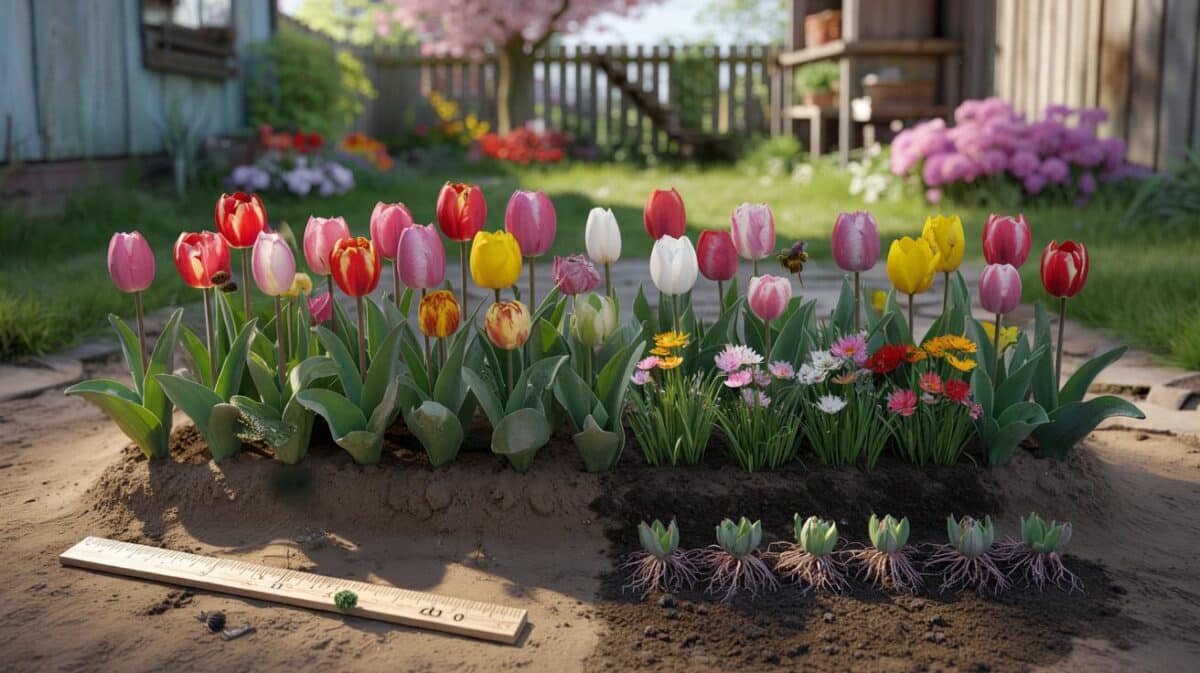
➡️ If your flowers bloom unevenly, spacing is often the hidden cause
That might look like sitting five minutes in your parked car before going into a family gathering.
Or closing your eyes for two minutes in the bathroom at work after a tense meeting.
Those tiny solo moments act as emotional “buffer zones”.
They give your nervous system time to downshift instead of crashing.
Many people who rely on internal regulation push themselves to be “on” all the time. They say yes to every plan, answer every message, stay in the chat long after their brain has checked out. Then they wonder why they get home feeling irritated by nothing and everything.
If that’s you, you’re not dramatic, you’re overloaded. Emotional processing needs space the way muscles need rest days.
One common mistake is waiting until you’re completely fried before you step away.
Let’s be honest: nobody really does this every single day.
But noticing your early signs — tight jaw, shallow breathing, zoning out in conversations — can help you take a quiet break before you snap.
“People who prefer to regulate emotions internally often think they’re ‘too sensitive’ or ‘bad at socializing’,” explains a clinical psychologist I spoke with. “In reality, they usually have a finely tuned emotional radar. They just need more solitude to let that radar reset.”
- Micro-breaks: 60–120 seconds alone in the bathroom, stairwell, or outside. No phone, just breathing and noticing your body.
- Transition rituals: a short walk after work, a shower in silence, or journaling three lines before bed to dump the day.
- Social “caps”: deciding in advance how long you’ll stay at an event, then leaving without guilt when your time is up.
- Calming anchors: a playlist, a book, a simple stretching routine that signals to your brain, “We’re safe, we’re home, we can let go.”
- Honest scripts: simple phrases like “I’m heading out to recharge” or “I need a quiet night” that respect your limits without long explanations.
Learning to respect the way your brain calms down
There’s a quiet shame many people carry around this topic. You love your friends, your partner, your family, your colleagues. You like being invited, you enjoy connection, you’re grateful to be included. And still, part of you counts the minutes until you can be back on your own sofa.
You might wonder if you’re cold, distant, or “not built for relationships”.
The science suggests something else: your internal regulation style simply requires more solo time to function well.
The real problem usually isn’t the alone time.
It’s the guilt that comes with needing it.
If you grew up in a very social, noisy, or emotionally intense environment, you may have learned that retreating is rude or selfish. So you stay, and stay, and stay, until your body forces a shutdown: headaches, irritability, scrolling in bed until 2 a.m. just to feel like you finally had a moment for yourself.
The shift comes when you stop judging your need for solitude and start treating it like sleep, food, or water. A basic requirement, not a luxury.
You can love people deeply and still not want to process your emotions in front of them.
Some nervous systems just repair themselves best in low light, like film in a darkroom.
When you start seeing your alone time as maintenance instead of “hiding”, choices get simpler. You leave the party a bit earlier. You block one quiet evening a week. You tell your partner, “If I disappear into a book after dinner, it’s not about you, it’s about me recharging.”
That small honesty disarms a lot of misunderstandings.
It also gives others permission to notice their own limits.
For some, regulation will always be a team sport.
For others, it’s more of a solo practice with occasional coaching from the people they trust most.
| Key point | Detail | Value for the reader |
|---|---|---|
| Internal regulation | Using thoughts, sensations, and private rituals to calm down rather than constant external support | Helps you recognize your style and stop labelling yourself as “antisocial” |
| Planned solitude | Short, intentional alone moments before and after emotionally heavy situations | Reduces overwhelm and emotional “hangovers” after social events |
| Guilt-free boundaries | Communicating your need to recharge and setting time limits on social exposure | Protects your energy while keeping relationships honest and sustainable |
FAQ:
- Question 1Does preferring to be alone mean I’m an introvert?
- Answer 1Not always. Introversion and extroversion describe where you get energy, while regulation is about how you process emotions. You can be quite outgoing and still need solitude to calm your inner world.
- Question 2Is internal emotion regulation healthier than relying on others?
- Answer 2Neither style is automatically better. A blend tends to work best: a solid inner toolkit plus a few trusted people you can lean on in tougher moments.
- Question 3Why do social events leave me exhausted when others seem energized?
- Answer 3Your brain may be processing more signals — tone of voice, tension, subtext — and then cleaning all that up afterwards. Solitude gives it space to sort through the overload.
- Question 4How can I explain this need to friends or family without hurting them?
- Answer 4Stick to “I” statements: “I function better when I get some quiet time,” or “I may leave a bit early so I’m not wiped out tomorrow.” Emphasize that it’s about your energy, not about them.
- Question 5Can I learn to be less dependent on alone time?
- Answer 5You can stretch your tolerance a bit by adding small social breaks — stepping outside, going to the bathroom, changing rooms — instead of disappearing for hours. But your basic wiring probably won’t change, and that’s okay.