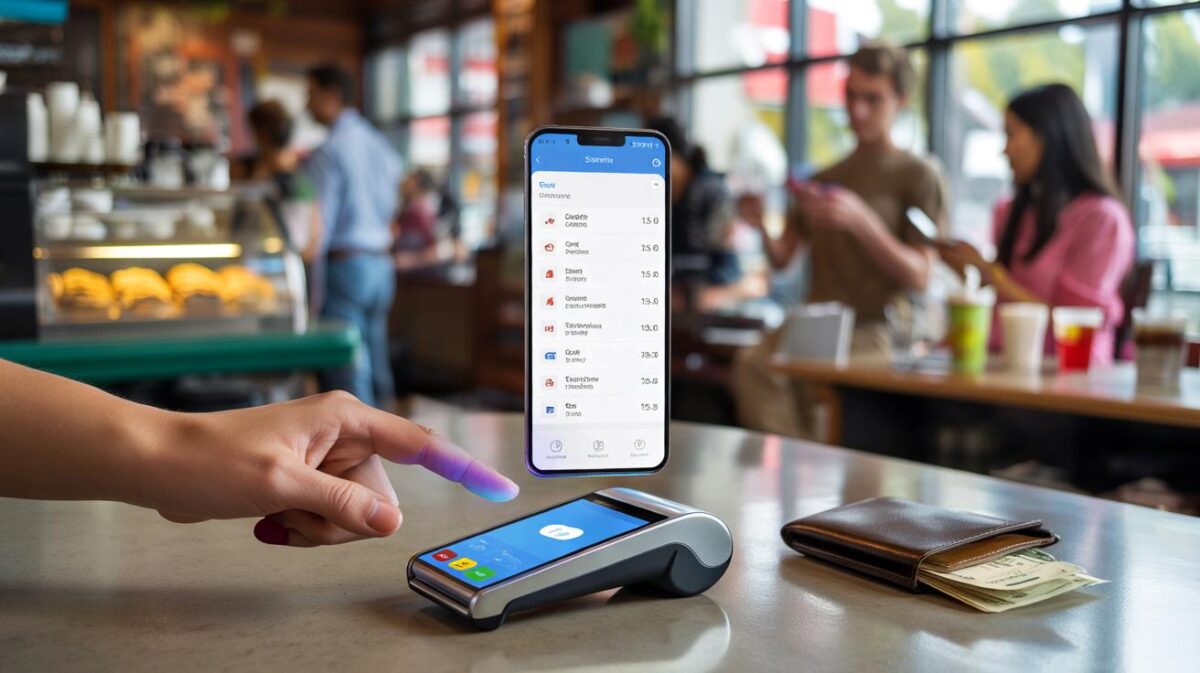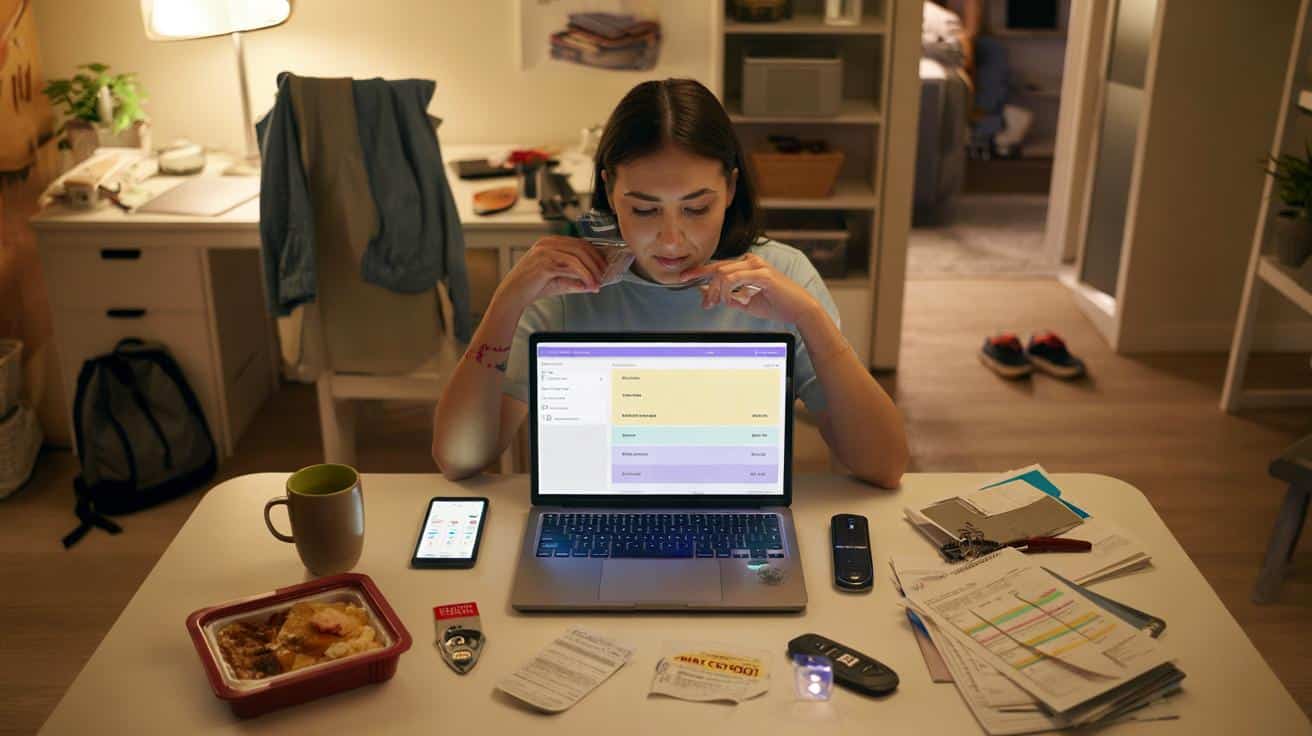
Friday night, end of the month, your banking app lights up like a bad news notification.
You scroll through the list of payments with that mix of guilt and confusion. Groceries, takeaway, a “quick” Amazon order that wasn’t supposed to happen. Somewhere, on your desk or buried in your notes app, there’s a perfect budget you crafted with good intentions and colored categories.
The numbers on the screen don’t look anything like that neat plan.
You sigh, promise yourself that next month will be different, and close the app.
Then rent is debited, the car needs a repair, your friend texts you about concert tickets, and your “next month” starts looking exactly like this one.
Maybe the problem isn’t you.
Maybe it’s the kind of budget you’re trying to live with.
A budget that survives real life, not just a spreadsheet
Most traditional budgets are written like diets: strict, fragile, and built on the fantasy that nothing unexpected will happen.
On paper, you swear you’ll spend exactly $80 on eating out, $0 on impulse buys, and never, ever touch your savings. Then real life walks in with a birthday dinner, a last-minute school trip, and the day you’re too tired to cook.
The gap between “planned life” and “actual life” is where most budgets fall apart.
Not because people are irresponsible, but because human lives are messy.
A budget that works has to flex with those messes instead of pretending they don’t exist.
Think of Emma, 32, who tried to follow a perfectly rigid budgeting template she found on social media.
Every dollar had a category. Every category had a hard limit. She tracked everything for two weeks, got overwhelmed, and then abandoned the whole thing after a spontaneous weekend away blew the numbers out of the water.
When her car insurance went up unexpectedly, she felt like she’d “failed” her budget.
So she stopped opening the app. She stopped even looking at her spending.
Three months later, her credit card balance was higher, and her sense of control was lower.
This is how many people quietly give up on budgeting: not in a dramatic moment, but in a slow distance between a rigid plan and a very human life.
Realistic budgeting starts with one shift: treat your budget as a living system, not a contract you’re punished for breaking.
Life will always bring “unknowns”, but they don’t have to be surprises to your wallet. Patterns emerge: how often your friends suggest dinners out, how your energy dips on Thursdays, when school or work expenses return.
➡️ Why feeling tired after a full night’s sleep is more common than you think, and how to fix it
➡️ This overlooked habit makes daily expenses feel smaller than they really are
➡️ I cooked this comforting meal without rushing and it showed
➡️ Stylists recommend this cut for hair that refuses to behave
➡️ If your flowers bloom unevenly, spacing is often the hidden cause
➡️ People who feel calmer alone often regulate emotions internally, psychology says
➡️ The common pruning habit that actually weakens fruit trees over time
➡️ If you feel emotionally alert even while resting, psychology explains the learned readiness
Once you see those patterns, you can budget for your *actual behavior*, not your ideal behavior.
That means building in buffers, “fun money”, and flexible categories that move when life moves.
The budget that adapts wins every time over the budget that breaks and gets abandoned.
Designing a budget that bends without breaking
Start with three big buckets instead of 15 tiny categories.
One: fixed costs (rent, loans, subscriptions, insurance). Two: essentials that vary (groceries, transport, health, kids). Three: flexible life (eating out, treats, hobbies, random stuff).
Write out your net income, subtract your fixed costs first, then set a realistic total for essentials.
Whatever remains is your flexible life bucket. That’s your “yes” money.
You can still track sub-categories if you like, but the real magic is knowing how much you can spend on life as it actually unfolds, without feeling guilty every time you say yes to a coffee.
A simple example.
Say you bring in $2,800 after tax. Fixed costs are $1,400. Essentials average $700. That leaves $700 for the “flexible life” bucket, plus any savings you want to carve out.
Instead of saying “I will only spend $60 on restaurants and $40 on fun”, you decide:
“This month, my flexible life budget is $500, and I’ll try to save $200.”
So if you overspend on a date night, you don’t declare budgeting failure.
You just know your flexible pot is smaller for the rest of the month. This is how a budget becomes a guide, not a judge.
Psychologically, this works because your brain hates feeling trapped but loves clear limits.
When your budget has 20 rigid micro-categories, one broken rule feels like a total collapse, and you stop engaging. The all-or-nothing effect kicks in.
With larger buckets, you still have structure, but you also have room to adjust.
You remain in conversation with your money instead of feeling like you broke a promise.
Let’s be honest: nobody really does this every single day.
You don’t need perfect discipline. You need a system that forgives you and still keeps you pointed in the right direction.
Micro-adjustments, not guilt spirals
One precise method that changes everything: the weekly reset.
Instead of waiting for the end of the month to see the damage, you sit down once a week for 10 minutes. You open your banking app, note your current balance in each bucket, and adjust next week’s spending.
If groceries ran high, maybe your flexible bucket gets trimmed slightly.
If you had a quiet week and spent less on going out, you move a little extra to savings or a sinking fund for upcoming expenses.
It’s a small gesture, but it keeps the budget alive and responsive.
The mistake many people make is turning that weekly moment into a self-attack session.
They open their statements and mentally list every “stupid” purchase. That shame fog is the fastest way to stop checking altogether.
Try talking to yourself the way you’d talk to a friend.
“Okay, I spent more than I wanted on takeout. Why? Was I exhausted, stressed, unprepared?”
Then you adjust something small: a few easy freezer meals for next week, or a slightly lower restaurant budget.
Real-life budgeting is not about punishing yourself. It’s about understanding your patterns and gently editing them.
Sometimes the smartest budget isn’t the one that saves the most money on paper, but the one you can actually live with for more than three weeks.
- Create a “Life Happens” fund
Aim for a small buffer each month (even $30–$50) just for surprises, so emergencies don’t wreck your plan. - Use one main flexible category
Group “fun, social, random” together instead of micromanaging every latte and movie ticket. - Set a minimum savings, not a perfect one
Even a tiny automatic transfer builds the habit and survives months when life gets rough. - Track once a week, not every transaction
A simple snapshot is more sustainable than obsessing over every cent. - Let yourself adjust mid-month
Moving money between buckets isn’t failure, it’s what real adaptation looks like.
Let your budget grow up with you
A flexible budget is less about numbers and more about honesty with yourself.
You’ll go through seasons: months where savings pile up easily, and months where surviving with dignity is the win. Both are part of the story.
As your income, responsibilities, and priorities shift, your buckets should shift with them.
Maybe your “fun” budget shrinks while you attack debt. Maybe it grows again when your loan disappears. Maybe you start a small “joy” fund just for things that refill your energy.
*The point is not to impress anyone with your discipline, but to build a money system that feels like it belongs to your actual life.*
| Key point | Detail | Value for the reader |
|---|---|---|
| Big buckets, not tiny categories | Group spending into fixed, essentials, and flexible life | Reduces stress and makes the budget easier to stick to |
| Weekly reset ritual | Quick 10-minute check to adjust spending and buckets | Keeps you in control without daily monitoring |
| Built-in flexibility | “Life happens” fund and permission to move money around | Budget survives unexpected events without collapsing |
FAQ:
- How much should I put into my flexible life bucket?Start by subtracting your fixed costs and realistic essentials from your income, then choose a number that still allows at least a small amount of savings, even $20–$50.
- What if my income changes every month?Base your budget on your lowest reliable income, then treat anything above that as a bonus you can split between extra fun, savings, or debt.
- Is it bad to move money from savings when things get tight?It happens; the key is to treat savings as a default, not a prison, and to rebuild when the pressure eases.
- Do I really need to track spending categories?You only need enough tracking to see patterns; broad categories and weekly check-ins are usually enough.
- How do I stop feeling guilty about every purchase?Decide in advance how much “guilt-free” money you have, spend it consciously, and remind yourself that enjoying your money is part of a healthy budget.